
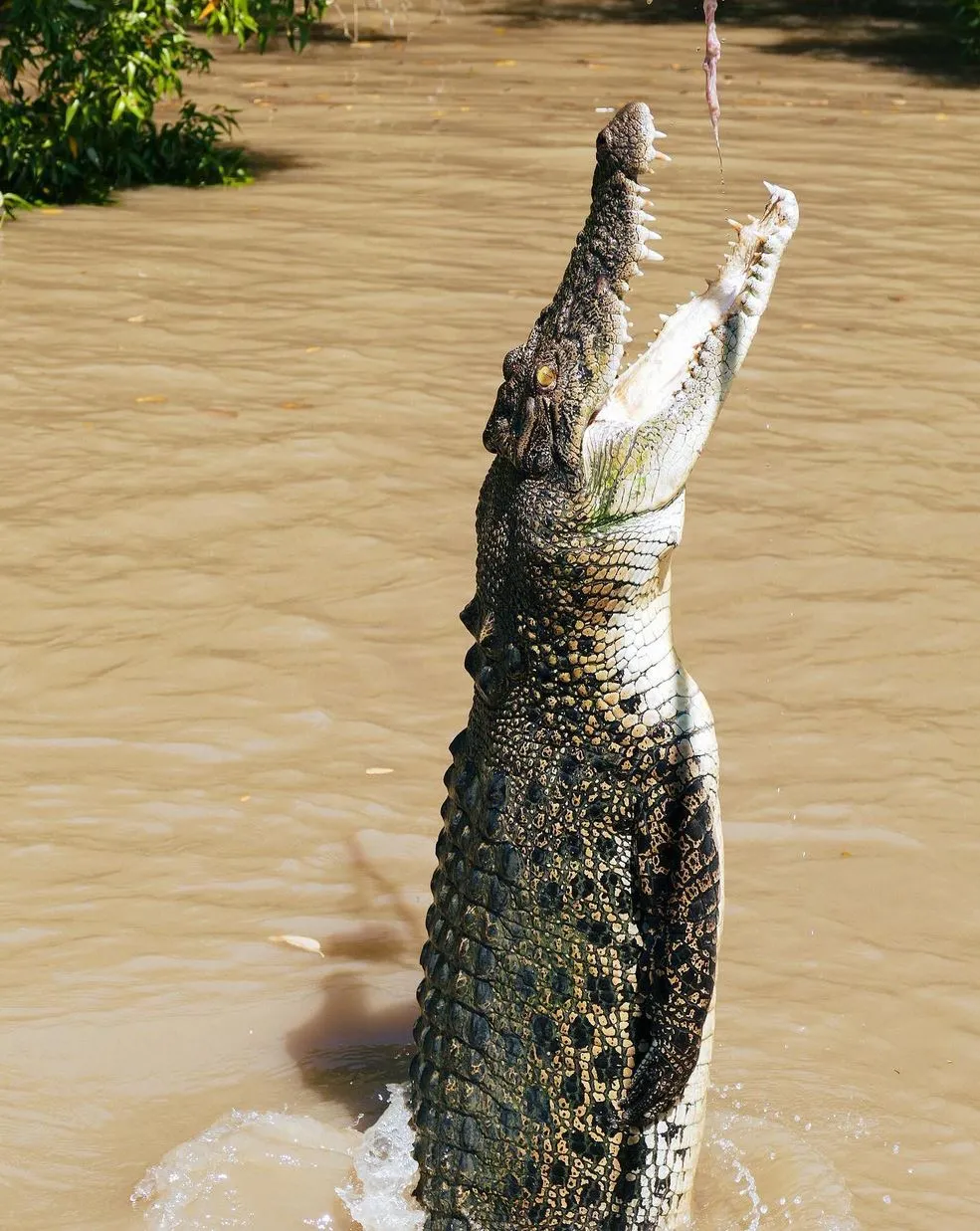
When it comes to what future travellers should know before taking the leap and joining a jumping crocodile cruise, this is most definitely going to be an experience that’s way out of the box from your standard wildlife tour. Once you’re actually on the Adelaide River, watching a Saltwater Crocodile burst up from the water to grab a snack, you’ll quickly come to understand that this is no staged show – it’s a real front-row seat to the raw power of nature. These incredible creatures are the undisputed monarchs of the Northern Territory’s Top End, and a Jumping Crocodile Cruise from Darwin is most certainly the best way to get up close and personal with them, in the safest possible way, while soaking up the expert commentary from guides who’ve spent their lives immersed in crocodile country.
A Cruise That’s Earned a Massive Reputation
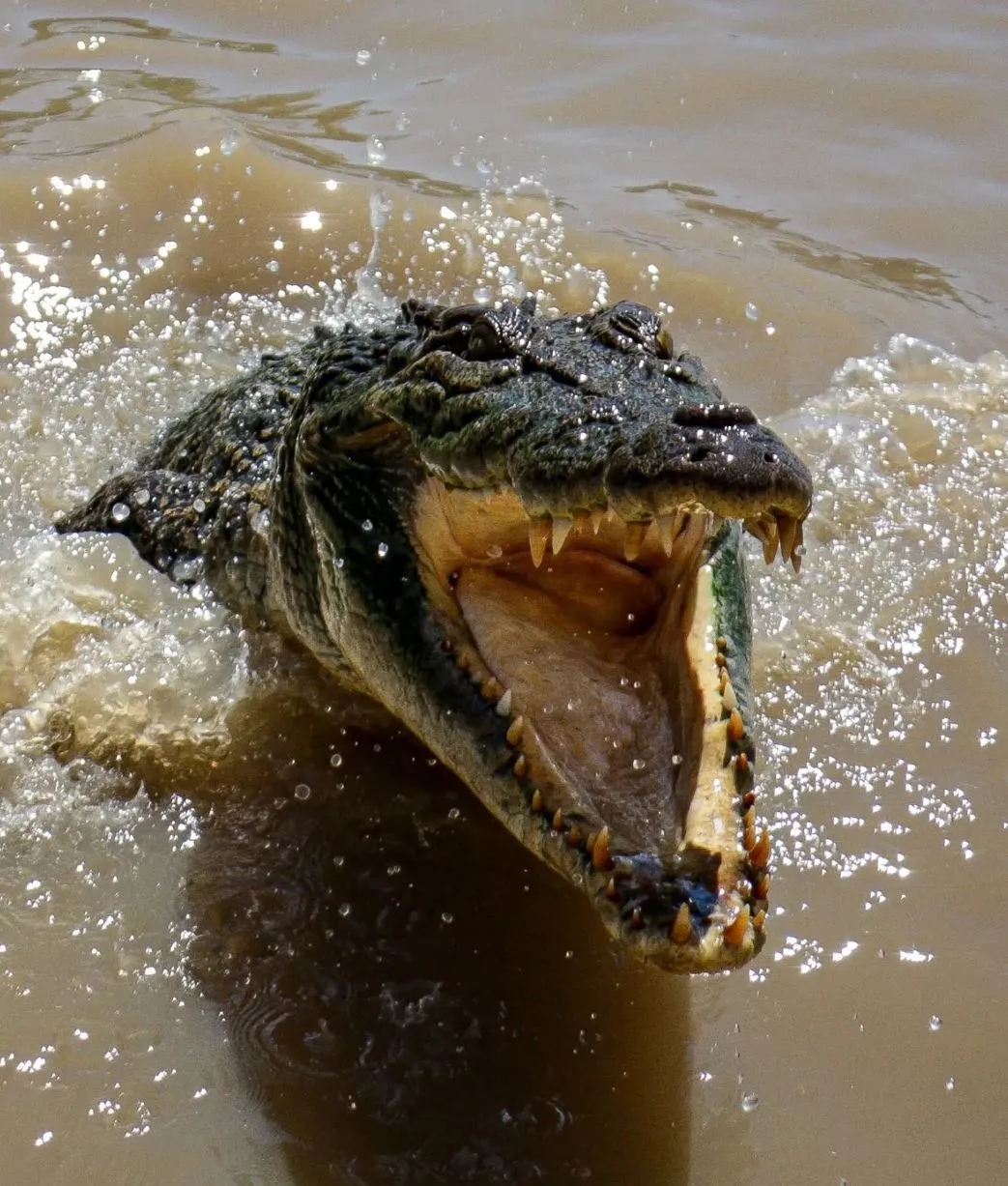
You’re going to find plenty of crocodile cruises dotted across northern Australia, but none of them can match the legendary status of the Jumping Crocodile Cruise on the Adelaide River. This is your quintessential croc country – picture thick mangrove banks, baking sun-drenched mudflats, and waterways teeming with Saltwater Crocs – the locals affectionately call them “salties” by the way.
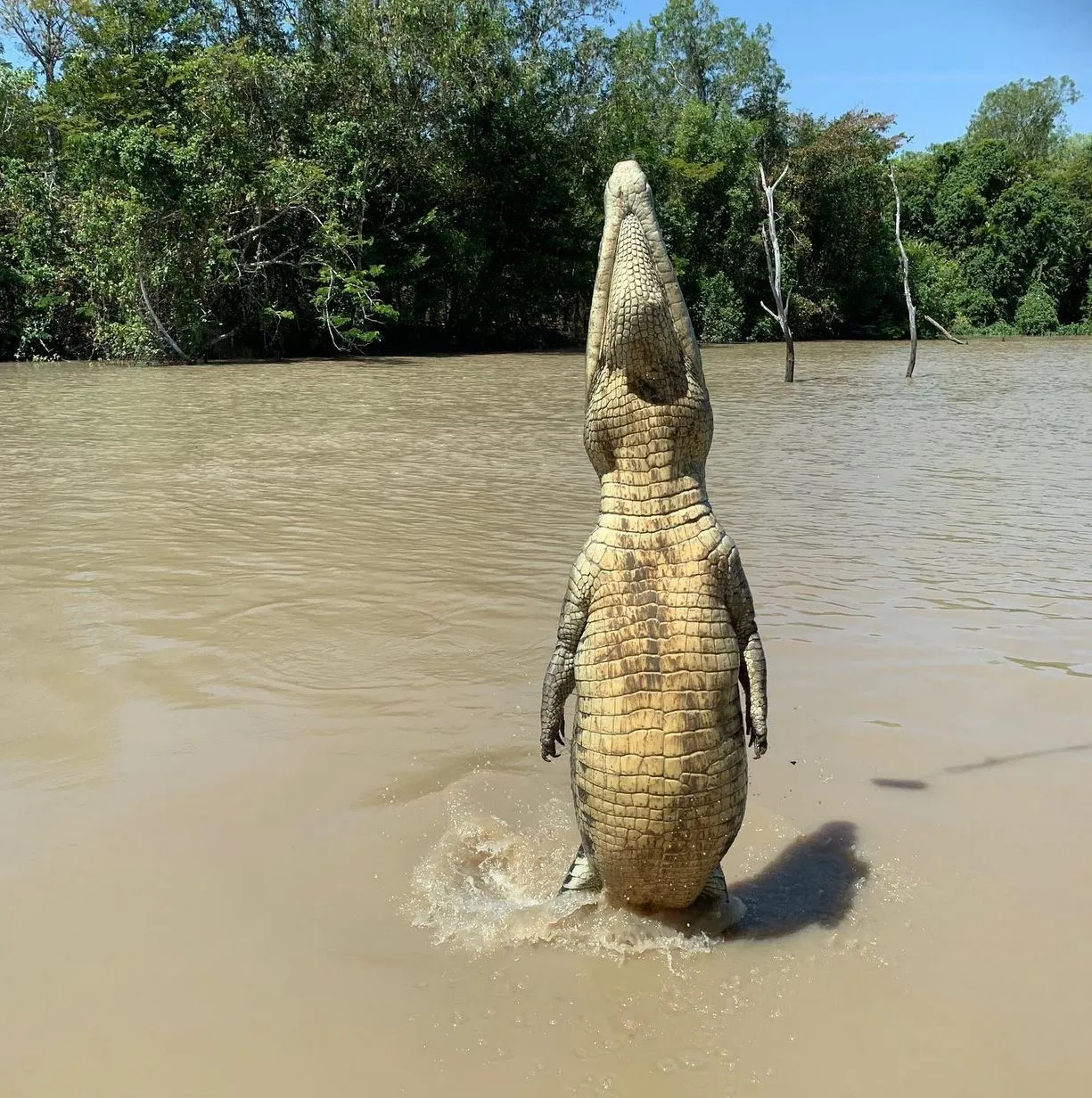
The cruise originated as a simple idea from locals: give visitors a safe glimpse of wild crocs in their natural habitat. Fast forward a few decades, and it’s now one of the Top End’s most famous wildlife experiences. And while it’s certainly pretty thrilling to see one of those massive five-metre reptiles launch itself out of the river, what really sets it apart is just how much you’ll be learning about their behaviour, the types of habitats they call home, and all about the complex balance between tourism and conservation.
The guides here don’t just chuck the crocs some chum; they actually interpret every single move. You’ll hear all sorts of stories about dominant males, all the different types of territorial battles, and the crocodile families that have ruled over different bits of the Adelaide River for generations.
When to Go: Timing Your Trip for the Best Croc Action
If you really want to see the most jaw-dropping leaps and get the best possible view, you’re going to need to time that Jumping Crocodile Cruise around the seasons just right.
| Season | Months | Conditions | Croc Activity | Accessibility |
|---|---|---|---|---|
| Dry Season | May – October | Sunny, cooler (25–32°C), calm rivers | Very active, easy to spot | All tours run daily |
| Wet Season | November – April | Hot, humid (up to 35°C), tropical rain | Moderate, more nesting behaviour | Access can be limited due to flooding |
During the dry season, water levels just about disappear, so crocs get concentrated & it’s a real good time to spot one – not a hard thing to do either. The air’s crisp, visibility is great, and you can catch a jumping crocodile in all its glory.
In the wet season, the landscape is unrecognisable – lush, loud and teeming with life. Yes, some roads can get cut off near the ferry crossing, but if you can make it through – and check the road conditions first of all – it’s a wild time to see the Territory at its wildest. Check the official NT apps or news sites before heading out – closures can happen fast around here.
What to Expect on a Croc Cruise from Darwin
Most Jumping Crocodile Cruises from Darwin start bright and early with a pick-up and a 1-hour drive down the Arnhem Highway – long enough to spot a few wallabies and argue with your GPS a bit.
Once you get to the river, what hits you first is how quiet it is. Then the water starts to stir. You get on a sturdy boat that’s been built for safety and getting a good view – open sides and strong rails to keep you safe. Your guides are experienced and will give you a safety briefing before showing you wildlife, such as kites in flight, jabirus fishing in the shallows, and the unmistakable ripple in the water that signals a croc is on the move.
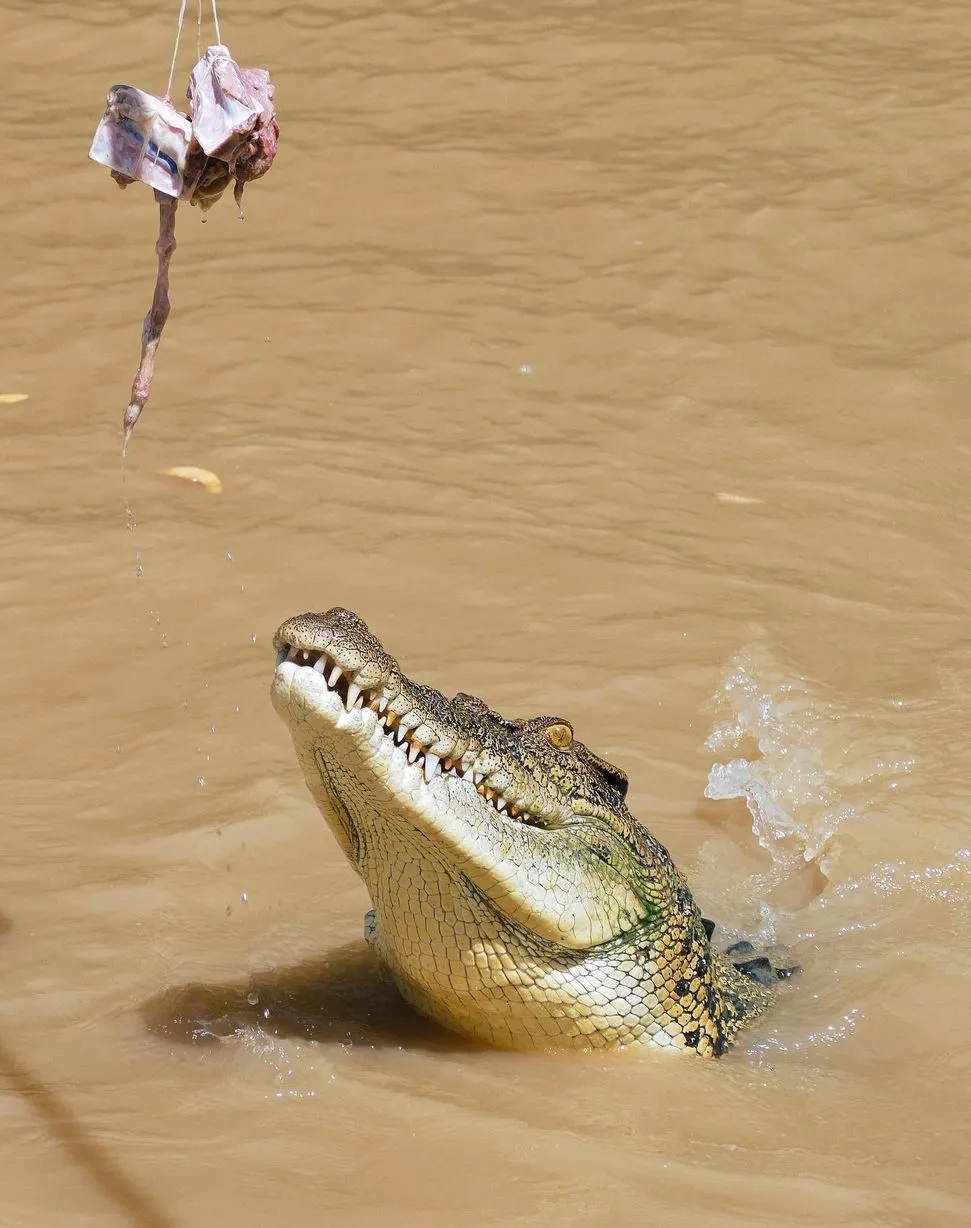
And then it happens – a Saltwater Crocodile bursts out of the water, jaws wide open, muscles rippling. It’s not just a leap – it’s a display of raw power. You can feel the rush of air when they hit the water.
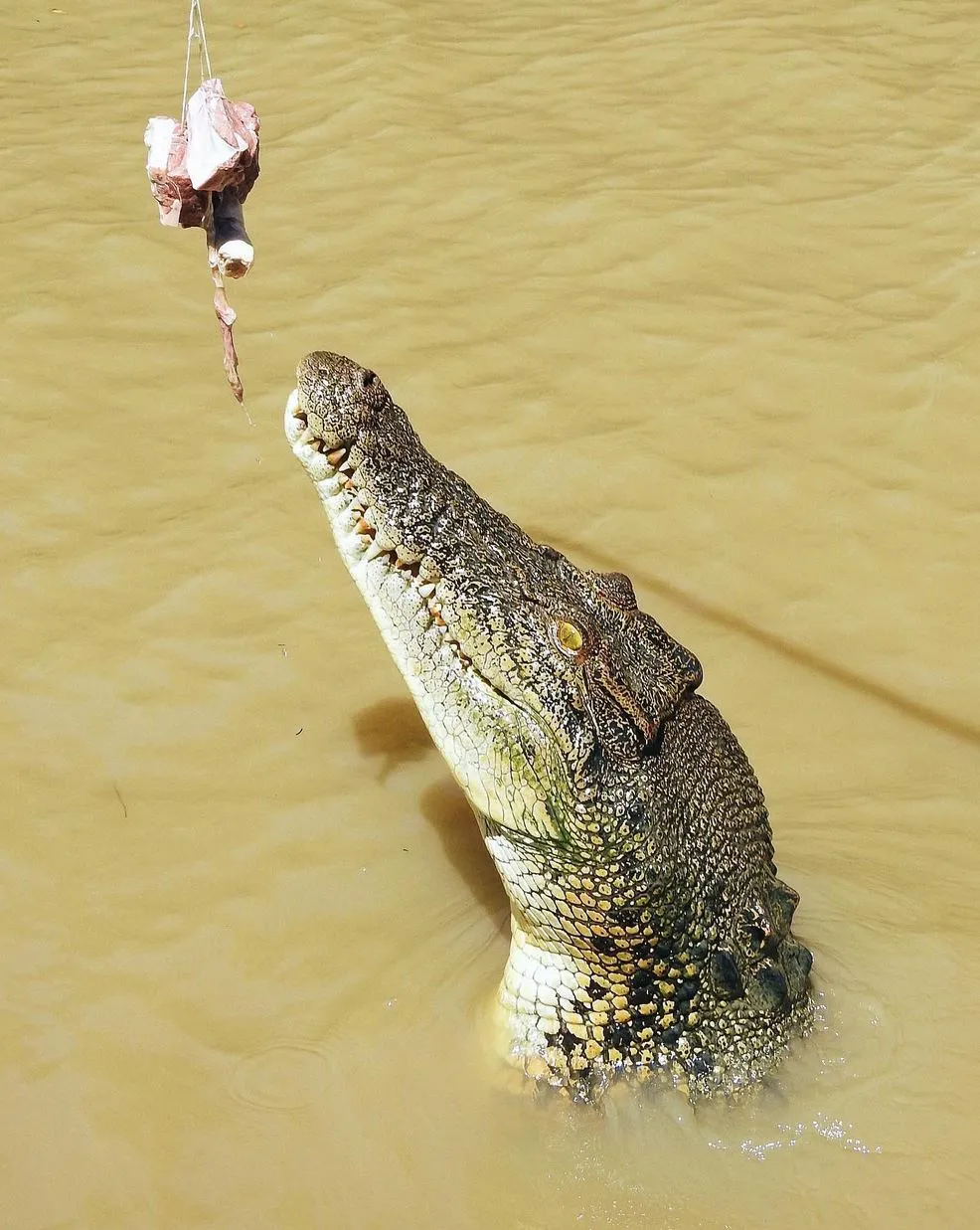
This is no circus act. The guides feed the crocs small portions – just enough to give you a glimpse of their natural leap, which is what they do in the wild to catch food like birds and flying foxes. Every movement is deliberate; every jump is precise. You’ll leave with a newfound respect for these magnificent creatures.
Staying Safe near the River: Some Very Simple Rules
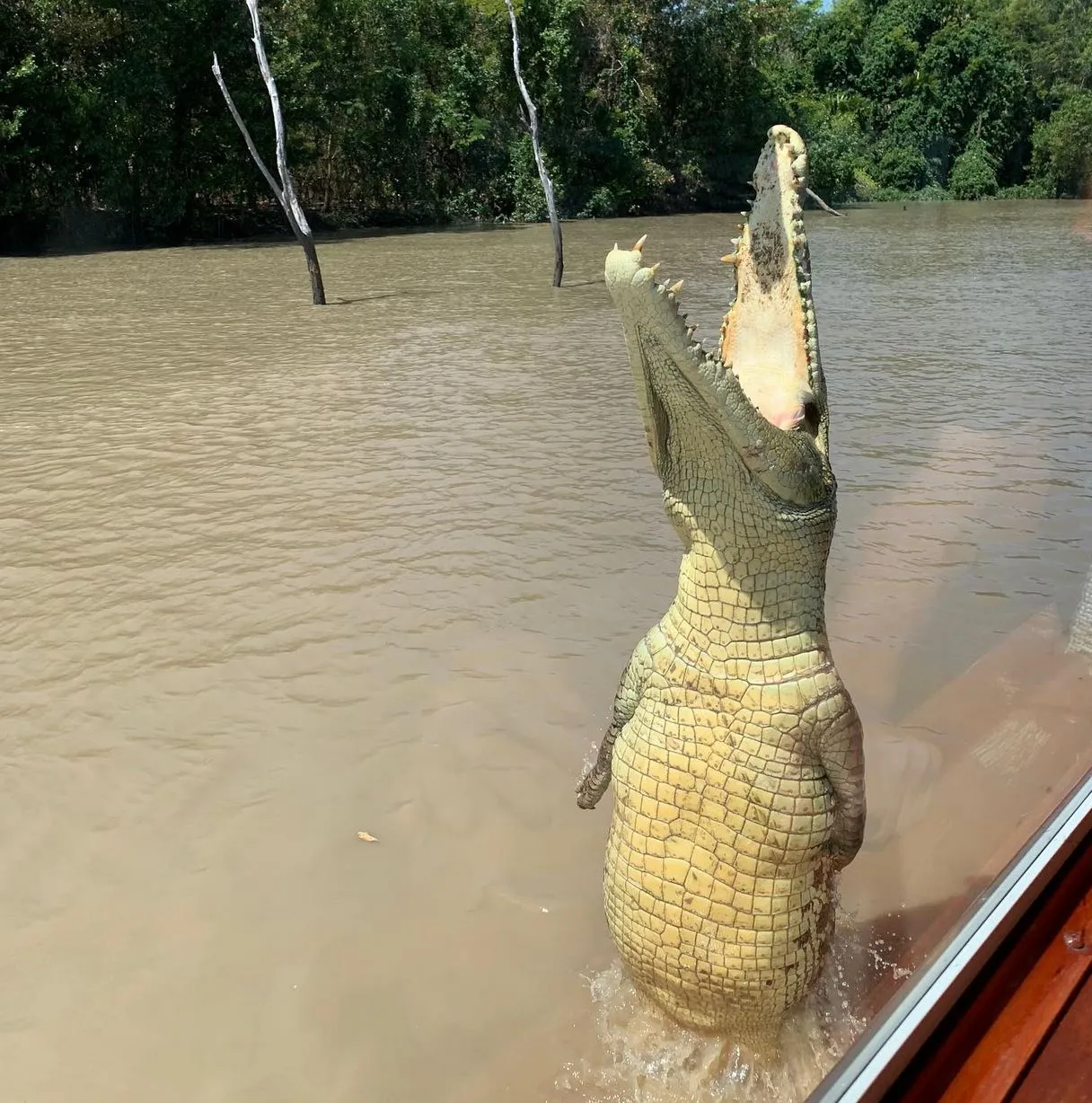
The one golden rule around here is this: be croc-wise. There are estimated to be 100,000 Saltwater Crocodiles in the Northern Territory – more than anywhere else – and they aren’t fussy about where they show up. Rivers, creeks, billabongs and even beaches – if there’s water, assume there’s a croc.
The Jumping Crocodile Cruise is safe because it’s run by licensed operators who follow the NT Wildlife rules to the letter. But outside the tour, remember:
- don’t go for a swim or wade in the river or estuary – crazy idea
- keep well back from the water’s edge – you never know what might be lurking
- follow every warning sign, even if it seems obvious
- camp at least 50m away from the water – don’t want someone’s pet croc paying a visit
Wildlife officers can move problem crocs near towns, but most of the Territory is their home. The idea is coexisting – protecting both people and these incredible creatures while keeping the tourism industry going.
Crocs – Getting To Know These Ancient Fella’s
The Saltwater Crocodile, or ‘salties’ for short, has been around longer than the dinosaurs. Some of these blokes can grow up to six metres long and tip the scales at over a tonne – that’s massive. Yet, despite the enormous size, they’re as sneaky as you can get. You can watch a guide spotting one from your boat, and it’s not uncommon for them to be caught out in the open just metres away – long enough for you to get a glimpse of the real deal.
They’re a pretty interesting mob when you get to know them. Territorial, smart, and even a bit social in their own special way. When you do the Jumping Crocodile Experience, you learn all about how changes to the environment, the tides and the weather all affect where they like to hang out. It’s a real eye-opener and one that leaves you with a healthy dose of respect and a new appreciation for wildlife in general.
What I’ve Learnt From Travelling The Territory
After years of chucking around the Top End, I’ve picked up a thing or two from my fellow operators on the Adelaide River. Here are a few nuggets of wisdom to keep in mind:
- Book your spot well in advance, especially if you’re planning to go during the dry season. The official websites and online booking tools are your best bet – local operators don’t charge you the earth for third-party commissions.
- Don’t forget the water bottle and sunscreen, because the Territory sun is no joke.
- Make sure your camera is charged, but also remember to just take it all in – photos just don’t do justice to the raw power of a croc.
- Get the lowdown from the guide – every single one of them has got a ripper of a yarn to share. It’s a great way to get a laugh or get a good scare.
- Consider supporting a local operator – a lot of them do some good stuff for croc conservation and research.
- If you’ve got the time, it’s also worth throwing in a trip to Litchfield or the Mary River wetlands – day trips are easy peasy and are chock full of good Aussie wildlife.
The Real Reason Behind The Croc Tours
I’ve heard some travellers knock the whole “jumping croc” thing as just a show. But that’s a pretty narrow view. The real deal is that the right kind of tour will give you a genuine appreciation for these incredible animals, reduce the number of people feeding them, and raise awareness about how to stay safe around them.
By showing people what’s really what with saltwater crocs, the tour operators create a healthier respect – one that used to be all about fear, which is suitable for the Territory, where, not that long ago, croc attacks were a whole lot worse than they are now, thanks to a bit of public education and some proper regulations.
Tourism NT and the Parks & Wildlife crew also use data from tour operators to monitor the population and manage the risks associated with the large number of individuals present.
When you choose a reputable tour operator, you contribute to the community and benefit from it.
Quick Facts: Crocodiles and Tourism in the Top End
| Fact | Detail |
|---|---|
| Estimated NT Croc Population | Over 100,000 (NT Govt, 2025) |
| Largest Recorded Croc | 6.3 m, Adelaide River |
| Lifespan | Up to 70 years |
| Licensed Cruise Operators | Around 5 in the Adelaide River area |
| Annual Visitors | ~300,000 to Top End croc regions |
That’s a lot of crocs – and a lot of curious visitors, all drawn in by one of Australia’s most valuable wildlife tourism stories.
Final Thoughts: Take a Leap and see Where it Takes You
If you’re after an Aussie wildlife experience that’ll get your adrenaline pumping and have you learning all sorts of new things at the same time, then the Jumping Crocodile Cruise really delivers – big time. Watching a Saltwater Crocodile shoot out of the river just a few metres from your seat is a pretty humbling reminder that the Top End is still very much a wild place.
It’s not a show; it’s a lesson in how to get along with wildlife, how to show respect, and how to stay in awe of just how incredible it all is. So grab your Akubra, grab your curiosity, and make sure you’ve got some space spare on your NT travel plans for a Jumping Crocodile Cruise from Darwin. Youll be heading home with more than just some pretty snaps – youll have a story that will stick with you for a while (and that is just the best sort of souvenir).
Travel Takeaway
The Jumping Crocodile Cruise is the real deal – it’s right down to the heart of the Territory, where nature is most definitely in charge, and the rest of us are just lucky to get to come and visit for a bit. It’s raw, it’s real, and it’s something you will never forget – and that’s precisely what makes a great Aussie adventure.
FAQ
How far is the Jumping Crocodile Cruise from Darwin?
About 70 kilometres down the Arnhem Highway – gives you about an hours’ drive.
Are the crocodiles on the cruise wild?
Yeah, they’re heaps wild – Saltwater Crocodiles, behaving just as they do in the wild, but under controlled feeding conditions.
Is it safe for kids?
No worries at all – the boats are all enclosed, have been rigorously safety-checked, and are being driven by professionals who know their stuff.
What’s the best time of year to spot croc jumping?
If you can make it during the dry season (May to October), you’ll be in for a real treat – clear skies and plenty of crocodile activity to see.
Can I book tickets online?
The answer is – yes – book through the genuine tour company websites or NT tourism apps to see what time slots are available.